
There is something seriously wrong with college football, but it’s not the football itself. Ole Miss head coach Lane Kiffin’s departure is a highlight of the money-centered, loyalty-free game college football has become. Saturdays still offer the same exhilarating atmosphere that the NFL can’t match. I’ve always believed it’s the thought of being so close to their childhood dreams that drives the players, but is that really the case? Are players and coaches still involved in the game for the love of football, or has it become one big money scheme hidden behind the scenes?
Professional football and college football are different, and college players should not receive payment. If that does not work, then the transfer portal rules should undergo a very thorough lookover after the end of this season.
What gives the NFL the privilege to pay players, and coaches the privilege to move from team to team, is the fact that they make a living from it. Every Sunday, all 53 players on an NFL roster play to put food on the table for their families. That is what makes them millions, while the coaches devote their lives to a team for the same reason: winning is money.
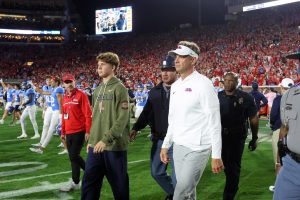
Sometimes the world allows the wrong type of person to win, resulting in them gaining excessive power and wealth. Lane Kiffin likely understands this well demonstrating a callousness to have students dedicate themselves to you, give their best effort, and then abandon them before the season ends to join a different team. Not to mention the fact that those players were responsible for achieving an 11-1 record and a No. 6 national ranking. That success was earned by the players, not by him. Kiffin continues to land high-salary big time coaching jobs, despite history of short tenures including being fired on the tarmac after a loss at USC, and public fallouts with ADs at USC and Tennessee.
A History of Dramatic Departures
He started as a college assistant before accepting a higher job as a defensive assistant. After just one year in the NFL with Jacksonville, Kiffin left to be a tight ends coach at USC exploring options at USC as a offensive line coach, and even offensive coordinator. Kiffin earned a job in the NFL as head coach of the Raiders.
After several difficult seasons with JaMarcus Russell in Oakland, owner Al Davis called Kiffin “a flat-out liar” without providing any context and accused him of “bringing disgrace to the organization.” Kiffin decided to file a grievance, claiming he was fired without cause. Following an investigation, a reason for his dismissal was found but never disclosed. Kiffin then had a brief tenure back in college with Tennessee where he had a bad fallout with AD Mike Hamilton and was not liked by many. Volunteer fans booed him on the tarmac as he left. He returned to USC as head coach where he had a public fallout with AD Pat Haden after 3 rough years. The firing was on the tarmac after a loss.
A brief year at Alabama as offensive coordinator put Kiffin in contention for a head coaching position again. He was infamously left at the game after winning the national championship as Alabama’s offensive coordinator. In 2016, he signed with Florida Atlantic University, where he found success by winning two Conference USA championships. However, the team never broke into the AP Top 25 rankings, and Kiffin wanted to return to a big name program. He is now the head coach at Ole Miss, starting with the 2019 season. Ole Miss, typically a strong team, enjoyed five successful years under Kiffin. That brings us to 2025.
Questionable Recruiting Ethics and Hypocrisy
At a dinner, Kiffin was talking with a recruit when Florida coach Urban Meyer called the recruit. Kiffin was angered by this and said, “Just so you know, you can’t call a recruit on another campus. But I love the fact that Urban had to cheat and still didn’t get him.” He was forced to apologize for those remarks the next day. Later, he told recruit Alshon Jeffery that if he committed to South Carolina, “he would end up pumping gas for the rest of his life, like all the other players from that state who had gone to South Carolina.” Kiffin denies making that remark to this day, but Jeffery’s high school coach was listening to the call on speakerphone.
Recent News Drama: Why We’re Here Today
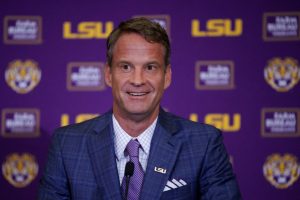
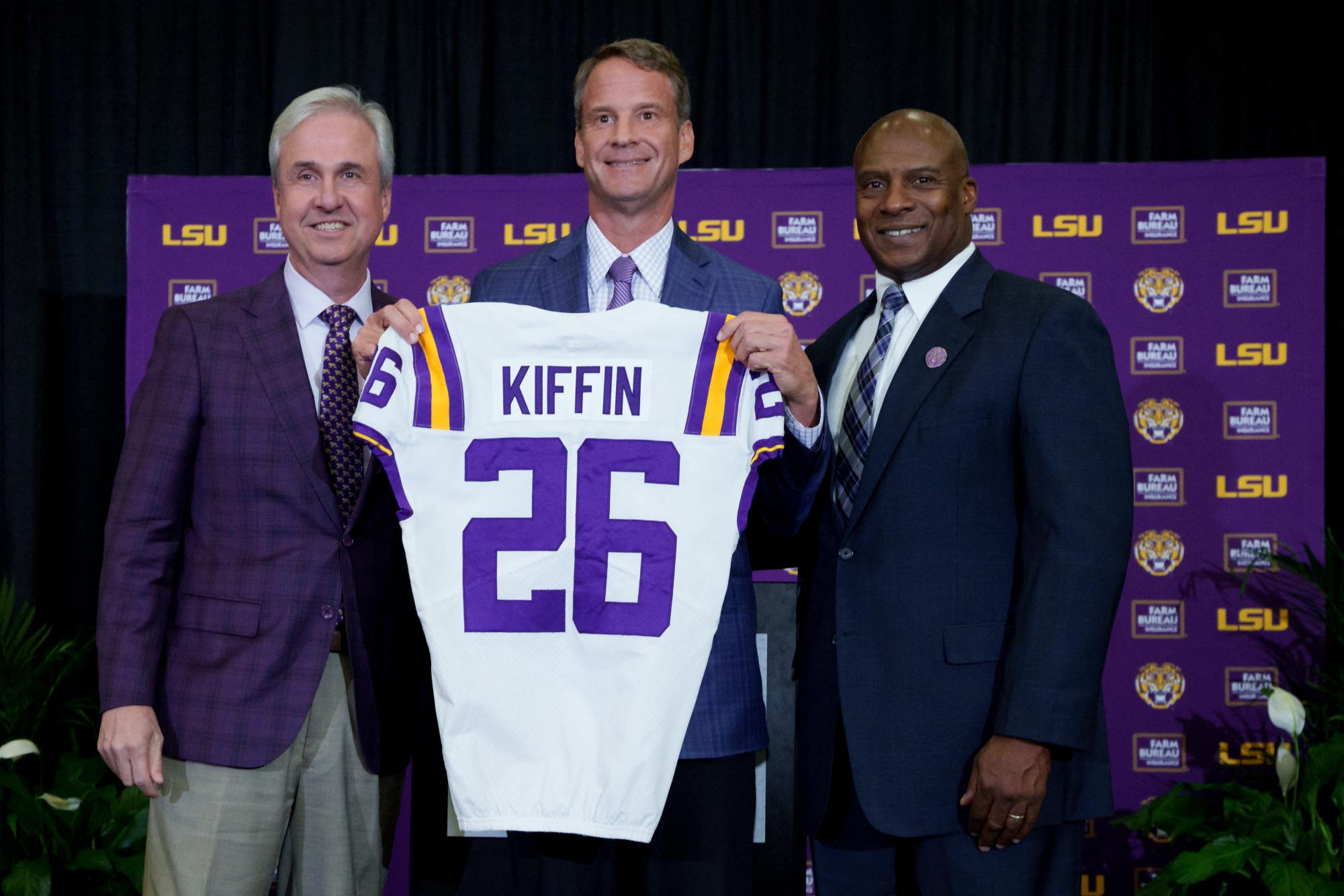
For the first time in school history, the Rebels posted an 11-win regular season, highlighted by victories over #4 LSU and #11 Oklahoma in Norman during the 2025 season. This historic season had Rebel fans excited for what promised to be an entertaining playoff run. Kiffin and the Rebels closed out their regular season with a statement 38-19 win over Mississippi State in the Egg Bowl, ranked 6th in the AP poll. Two days later, Kiffin accepted a coaching position at LSU, abandoning his Ole Miss team less than three weeks before the playoffs.
A meeting was initially scheduled for Monday morning, then delayed, then bypassed. Kiffin did not meet with any Ole Miss staff or players. Instead, he boarded a flight to Baton Rouge, where LSU has $25 million in NIL funds available to be spent.
Kiffin is a Primary Example of the Double Standard/Issues in CFB
In his career, he went 5-15 in the NFL, won the South Division once at USC, found success in Conference USA, and then abandoned a team that finally won for him. The team went 55-19 under Kiffin but was left high and dry by the coach who recruited them with unfulfilled promises.
For seven years and $90 million, I would coach at Death Valley too. However, if I were at LSU, I would avoid someone with recent messy exits from Ole Miss to LSU and dramatic departures from Tennessee and USC. His ethics might end up changing a few rules for coaches and even players with NIL deals and the transfer portal. With his NIL money clearly making an impact on the decision, it would not be surprising to see some Rebels hit the portal. For players not getting paid to play, their coach is leaving for money that he can spend on other players. Should NIL be allowed if it makes the players/coaches less loyal than ever?
His Ole Miss team is calling him out for more lies he made on social media recently about his departure timeline, and morale at Ole Miss, but his 7 year $90 million dollar deal with 25 million NIL dollars to spend makes it hard for him to care about the team that worked him up to the top.