
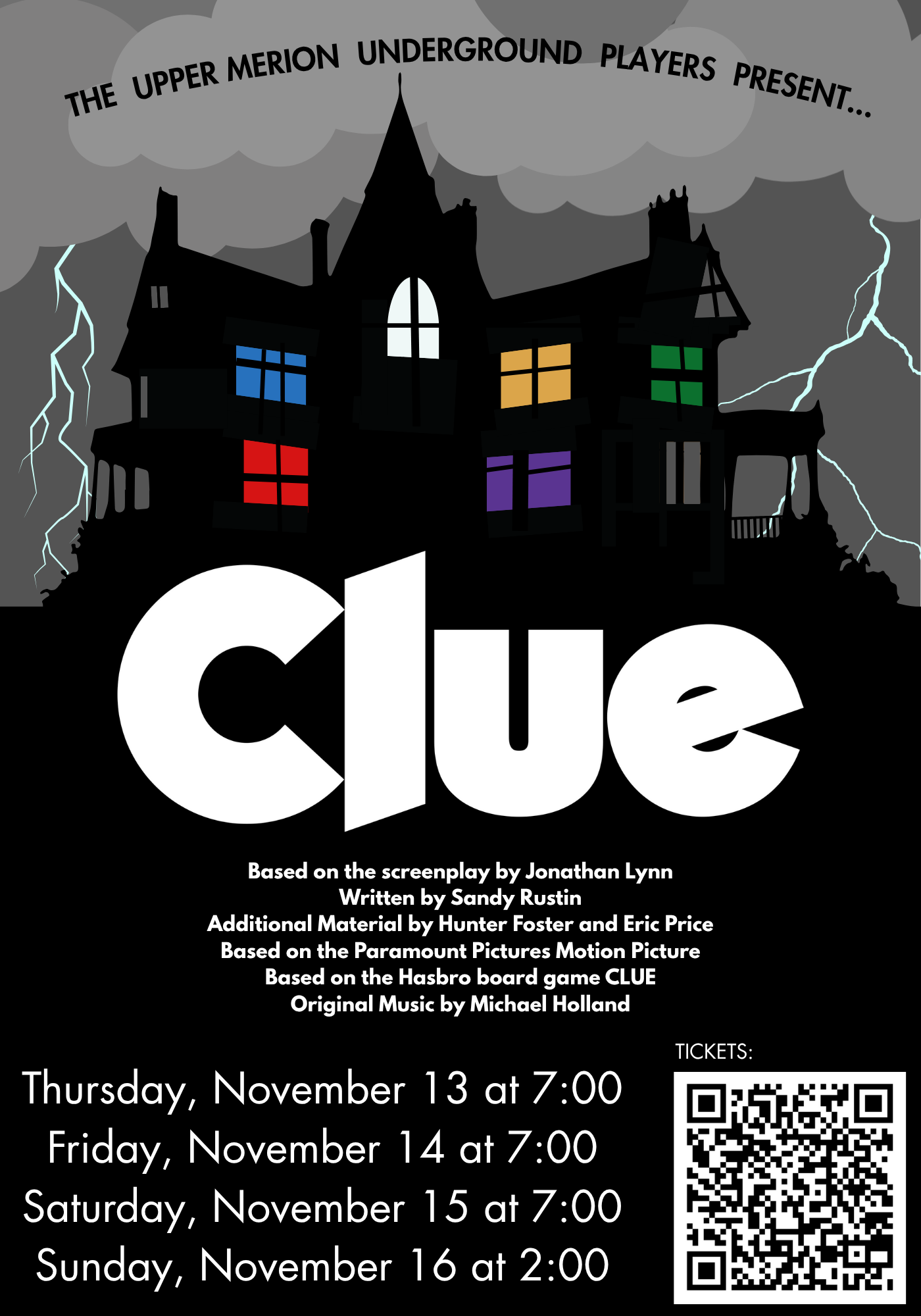
Based on both the classic Hasbro board game and the 1985 Paramount Pictures film, Clue centers around six enigmatic characters—Miss Scarlet, Professor Plum, Mrs. White, Mr. Green, Mrs. Peacock, and Colonel Mustard—who all arrive at the secluded Boddy Manor for an unusual dinner party. These six guests, known only by these color-coded aliases, all have one thing in common. Each of them possesses a compromising secret involving the insidious host, Mr. Boddy. The true purpose of the dinner party, orchestrated by the witty butler, Wadsworth, is revealed: Mr. Boddy is blackmailing each guest, setting the stage for the inevitable conflict. This unusual dinner party quickly turns into an eventful, storm-swept evening full of mayhem, rapid-fire dialogue, slapstick comedy, multiple murders, and a convoluted mystery.
THE SOCIAL CONTEXT:
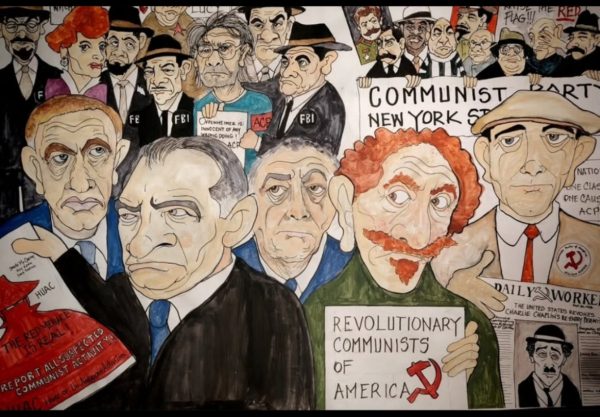
The story is set in 1954 Washington, D.C., which allows the narrative to reference playful jabs at the post-World War II Red Scare hysteria. The play satirizes the McCarthyism era of political paranoia and fear of communism. The Red Scare era was a widespread post-war fear that the Soviet Union would infiltrate the American government, because of the Cold War Rivalry that America and the Soviet Union had, the fall of China to communism, the Korean War, and the development of Soviet nuclear weapons. Fueling this panic was the period of McCarthyism, coined after Senator Joseph McCarthy, who became a prominent figure for his investigations into alleged communist ties within the U.S. government. McCarthy wielded baseless accusations and unfair investigative tactics, leading to the persecution and blacklisting of many individuals. The story also includes a nod to the Lavender Scare, which was a companion to the anti-communist period of McCarthyism and the Red Scare era. The Lavender Scare was a U.S. government-led moral panic that utilized the same suspicion and fear tactics that targeted communists to justify the persecution of closeted homosexuals who worked for the U.S. government. This hysteria claimed that all gay men and lesbians who worked for the U.S. government were “national security risks” and their “immoral conduct” made them unsuitable for government service. Both the Red Scare and McCarthyism began during the late 1940s, after the end of World War II and the beginning of the Cold War, and lasted until the mid-1950s after Senator McCarthy’s influence waned and his accusations were all proven false. However, while the Lavender Scare only investigated, fired, or forced LGBTQ+ individuals to resign from any federal service through the 1950s and 1960s, it wasn’t until 2017 that the policy that banned any LGBTQ+ individuals from federal service was fully repealed.
THE ORIGIN STORY:
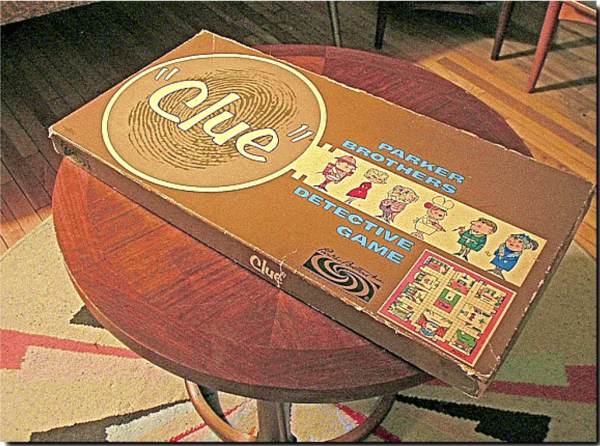
Originally titled Murder!, before being renamed Cluedo (Known as Clue in North America), it was initially conceived by English musician Anthony Pratt and released in 1949. Pratt, a talented pianist, often performed at grand hotels, which drew direct inspiration from the popular murder mystery parlor games that were held as a form of entertainment at those venues. However, the dark days of World War II were a direct catalyst in developing the concept of these parlor games into a board game. During the mandatory air raid blackouts, Anthony and his wife, Elva, were confined to their homes. This confinement made them yearn for these lively murder mystery parlor games to combat the isolation and dreariness of wartime. Anthony and Elva’s boredom led them to begin designing a board game that could capture the same thrill and exciting essence of the classic whodunit, but in a condensed and repeatable format. After Anthony Pratt patented Murder! in 1947, he sold it to a U.K.-based game manufacturer named Waddington’s and to its American counterpart, Parker Brothers (now owned by Hasbro). However, due to post-war material shortages—specifically paper and metal—production was delayed until finally hitting the shelves in 1949 as Clue in the United States, and as Cluedo in England.