
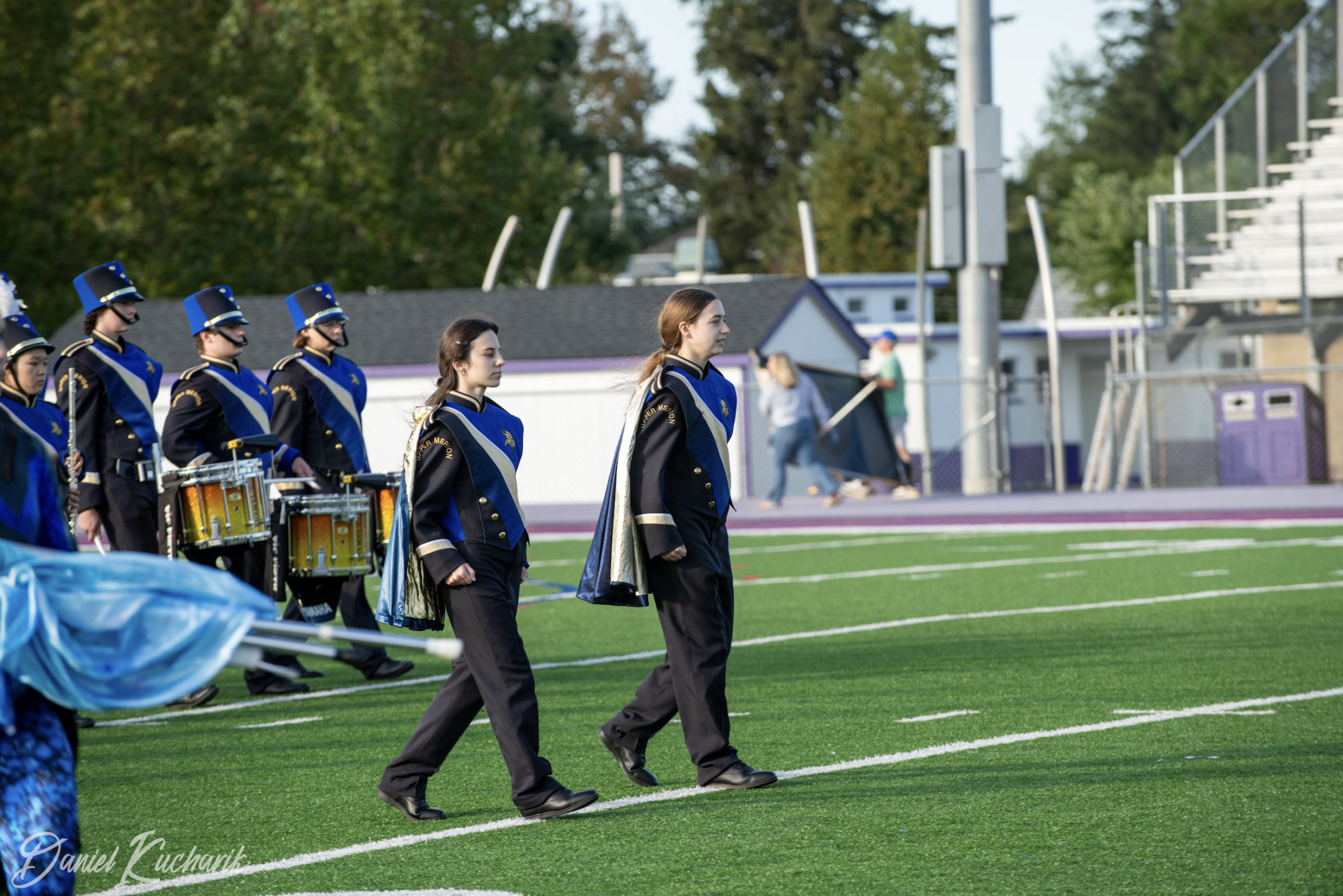
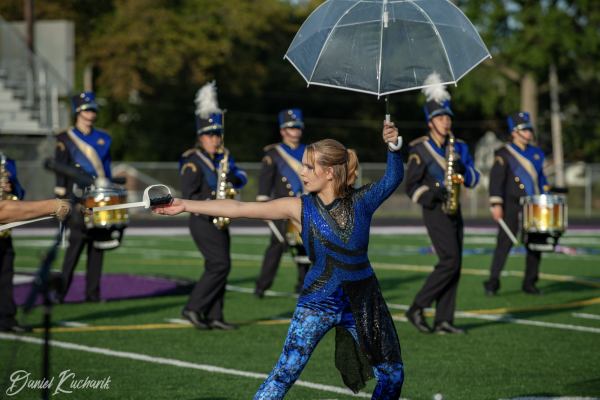
The Upper Merion Marching Vikings struck out the last chords of their show “Thunderstruck” last Saturday, sending a bolt of excitement through the crowd. The annual “Tip of the Hat” competition–presented by Cavalcade of Bands at Hatboro-Horsham High School–served as their final performance of this year. While their relatively low score of 77.450 did not accurately reflect their talents, their continued motivation throughout the season echoed through their final notes. Head drum major Veronica Katsanis recognized that “there are different circumstances in terms of intensity, resources, and funding.” While the UMMV program may provide more opportunities to create social bonds and play catchy stand tunes, its rigor lags behind other score-driven competitive bands.
Throughout the season–from rainy nights to holidays–the band as a whole faced various challenges as the rehearsals seemed too few for the extensive goals they had in mind. However, less time to develop marching skills enabled the group to focus on a typically lacking aspect: musicianship. Katsanis commented that the indoor time allowed for “more detail-oriented practicing” and a focus on musical confidence. While dedication has grown, confidence still serves as a limiting factor on the band’s ability to compete in the visuals category. Co-colorguard captain Sofia Szymanska recognized that “having confidence in colorguard is important too because then you can focus on the performance aspect of it.” Memorizing music is only half of the battle–precise choreography and drill demonstrate the talent of the marchers both on and off the field.
Growth across the UMMV season should not go unnoticed as increased morale has brought the band to new heights. At their previous competition at Phoenixville High School, the band scored 72.150. Their Hatboro-Horsham score was over 5 points higher, which, in marching band terms, demonstrates vast improvement. In previous years, these achievements seemed impossible when compared to the talent of other marching bands in competition. Feedback from members has increased discussion of implementing a more strenuous program, an ambitious goal for all levels of marching experience. Even within the 2025 season, Katsanis recognized the benefits of various changes, such as introducing a junior drum major and an on-field warm-up. She believes that “we should keep implementing unique ideas, especially visual elements like choreography,” as improved performances lead to increased scores and higher placing.
For a marching band to truly be successful, it needs dedicated members willing to put in the work to learn new skills and improve their talent. Katsanis recommended that outreach should start as early as possible: “The season goes by so quickly that you can’t wait for the ‘right time’ to propose an idea or event.” Appearing to have a full, coordinated band equipped with precise marching techniques and flawless choreography reflects motivation across the football field, especially to judges at competitions. While numbers and awards do not matter in the long run, confidence does. “Eyes with pride!” they yell thrice after home games, looking ahead to what competitive challenge awaits them next season.