
After decades without moon travel, NASA finally launched their latest mission–Artemis II–out of Earth’s atmosphere and into deep space. But what’s with all the hype around this fancy rocket anyway? The last crewed mission to the Moon was Apollo 17 in 1972. Not only that, this particular mission has been gaining support after multiple delays over the past few years. These astronauts traveling to space marks a major step towards missions beyond the Moon as well, laying the groundwork for the safety of future space travel.
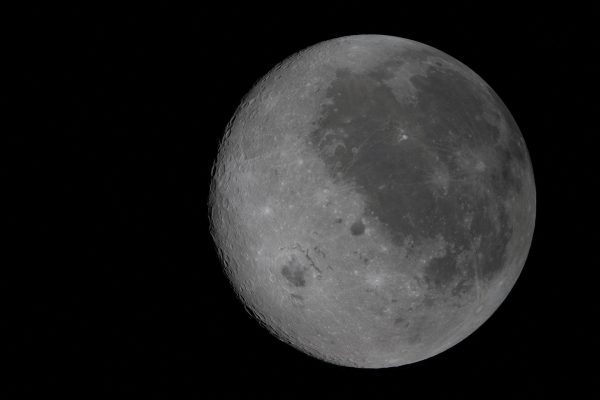
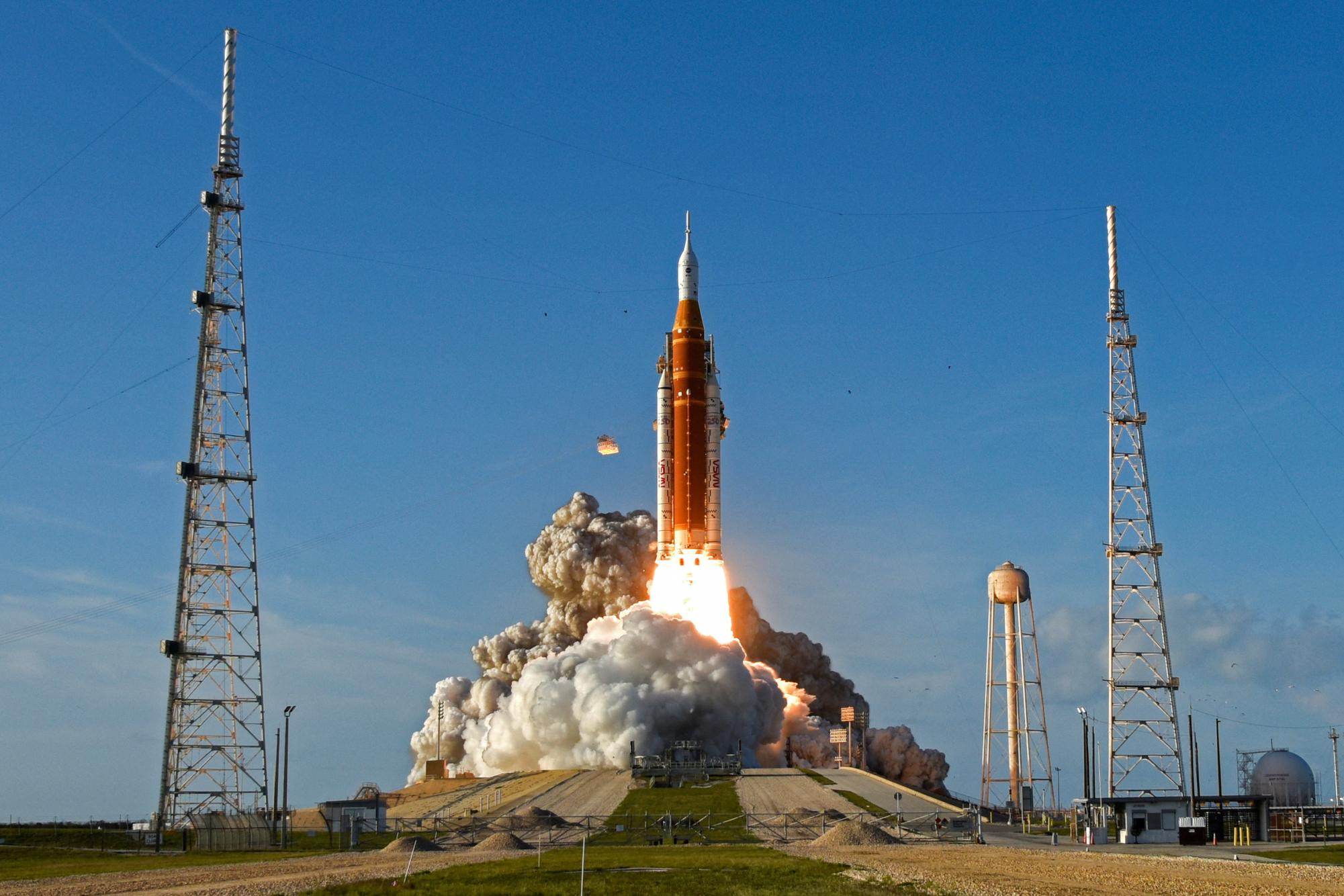
Attached to NASA’s Space Launch System, the Orion–their spacecraft–launched from the Kennedy Space Center on April 1 at 17,000 miles per hour. The crew is participating in a 10-day mission around the Moon in a figure-eight shape, losing contact with Mission Control as they pass by its dark side before returning home. In order to complete this cosmic U-turn, the spacecraft will be drawn into the Moon’s gravitational pull and catapulted back towards Earth. Even though technology has progressed greatly since the 1970s, roominess in spaceships has not. In this 10-day period, the astronauts must coexist, sleeping, eating, and working together in the same crowded areas. If all goes well on their journey, they are expected to re-enter Earth’s atmosphere around 25,000 miles per hour and splash down in the Pacific Ocean on April 10.
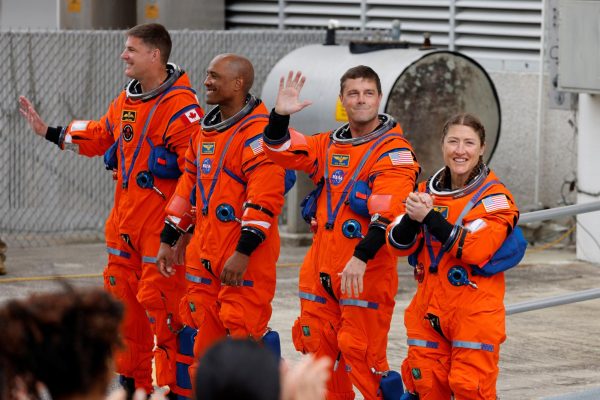
Aboard the Orion spacecraft lies a talented crew of 4 astronauts: Reid Wiseman, Victor Glover, Christina Kock, and Jeremy Hansen. Wiseman, the commander onboard, initially rose to fame in his social media presence depicting the experiences of rookie astronauts. His most notable contribution to NASA was his previous work on the International Space Station in 2014. He has gained popularity in the media in the last few days with his heartwarming decision to name a moon crater after his late wife Carroll. Artemis II pilot Glover has a rich history in engineering, even being the first Black American to work and live on the International Space Station. Apart from being a successful astronaut, he has applied his skills in various fields, from working as a Naval Aviator to a Legislative Fellow in the U.S. Government. The other two members on Artemis II serve as mission specialists, focusing on the more technical tasks on the spacecraft. Kock, the only female, is already leaving a humorous legacy on the journey with her quick repair of the toilet onboard, earning the nickname “space plumber.” Previously, she set a record for the longest single spaceflight by a woman. Finally, Native Canadian Hansen is representing the Canadian Space Agency. He has a background as a fighter pilot and knowledge of multiple different languages. Together, this magnificent crew makes history with their experiments in space–and a few cute selfies from inside Orion.

Thanks to the connectivity of social media, Artemis II is absolutely getting the hype it deserves. Just because the crew isn’t touching down on the Moon’s surface doesn’t mean they aren’t making giant leaps for mankind. The entire world gets to view outer space from the eyes of these astronauts and experience their heartwarming moments firsthand–well, 700,000 miles away rather. Artemis II is transforming science; its research is meant to connect the global space community through sharing data on astronaut health, the dark side of the Moon, and rocket performance in deep space. Beyond the science impact, the mission sends the first woman, Black American, and Canadian on a crewed lunar mission. The crew’s short 10-day journey aboard Orion sets up the potential for more expansive Artemis missions, possibly opening up the door to more Moon landings and–eventually–the first human steps on Mars. With new missions comes new opportunities to make history, inspiring the next generation of astronauts to dream big and aim for the stars.