


















Fast Facts
- Full Name: Dame Jane Morris Goodall
- Lifespan: April 3, 1934 – October 1, 2025
- Nationality/Origin: British
- Primary Field of Influence: Anthropology and Conservation
- Most Notable Work/Achievement: Revolutionized the study of chimpanzees
Profile Overview & Significance
While the rest of the scientific world was lounging comfortably in a laboratory studying cells, Jane Goodall was out in the African rainforest analyzing the curious behavior of primates in their natural habitat. Her discoveries of familial bonds and tool making in chimpanzees rocked the scientific community as they grappled with the animal’s capacity for intelligence and evolution. New discussions rippled across the globe, throwing zoologists, environmental conservationists, and even theologists into a panicked frenzy.
Goodall prioritized empathy in the scientific field and maintained an open mind while studying primates. She not only learned about this magnificent species but learned from them too, as her unorthodox methods of exploration allowed her to be fully immersed in their intelligent lives.
Historical and Cultural Context
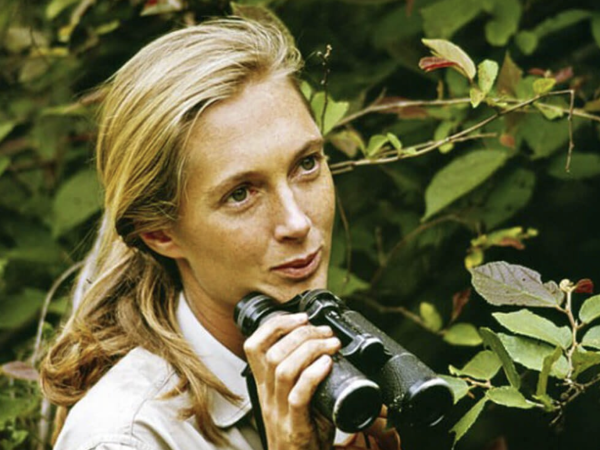
Ever since she was a child, Goodall felt a close connection to animals. She was inspired by characters from her favorite bedtime stories, like Dr. Dolittle and Tarzan, and allowed her creativity to fuel her desire to understand apes. Empathy became her policy–she treated her animals not as test subjects, but as friends. She gave each of them names, some of the most famous being David Greybeard and Flo.
But this path wasn’t easy.
Female primatologists–scientists who study non-human primates–were rare in the 1960s when Goodall began her studies. The scientific world did not take her seriously at first, focusing on her appearance and dismissing her as a “secretary” with an unachievable dream. They also attacked her lack of education–Goodall was thrown into the natural world with a mere passion for Africa and its animals. However, this actually allowed her to make significant contributions to zoology as she relied on emotion in the field rather than a memorized set of rules from Research 101. She never let insults discourage her and instead used them as motivation to overcome sexism in science. Goodall disregarded critics’ insistence on numbers and facts, utilizing never-seen-before strategies to establish real connections with her primate companions.
The Catalyst & Primary Contribution
Goodall poured over 60 years of her life into expanding primate research, traveling the world to spread her love for animals and hope
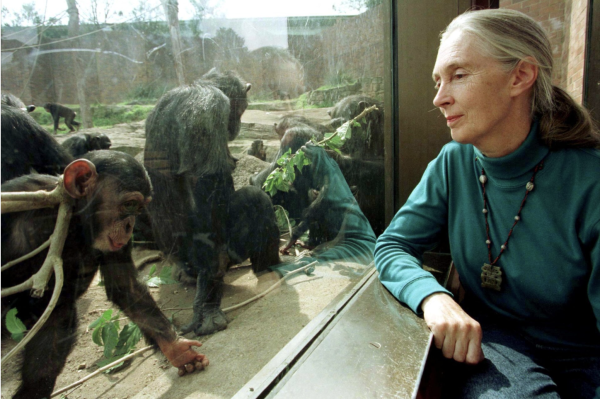
for a better future. In 1986, she transitioned from an animal lover to an activist upon discovering the decline of the chimpanzee species, shaping the trajectory of her research. From her first expedition at the Gombe Steam Chimpanzee Reserve to obtaining a Ph.D. in ethology, the study of animal behavior, at Cambridge University, she advocated for environmental conservation and genuine respect for nature.
In short, every primatologist was shocked to find that a woman had woven her way into the complex emotions of the chimpanzee mind.
Not only were Goodall’s methods influential, but her discoveries were too. She proved various long-believed facts wrong through her observations of chimpanzees utilizing tools and eating animals as well as plants. Goodall documented their social structures and behaviors when interacting with each other, including their capacity for emotion, warfare, and family bonds. She even wrote numerous books recapping her experiences and views on the wild, including In the Shadow of Man and Through a Window.
Goodall advocated for the environment and ethical treatment of animals beyond her field studies, even encouraging new generations to follow in her footsteps. Her most notable legacy is the creation of the Jane Goodall Institute in order to promote natural conservation and sustainability. This organization has various branches that expand this goal further, like the Roots & Shoots program that aims to engage young people in conservationist projects across the globe.
Original Voices & Contemporary Sourcing
Goodall charmed the media with her compassion and dedication to her work, evident in the shift in opinion among journalists and critics as times became more modern. She went from “stuck-up secretary” to “self-taught scientist” as their insults of her unorthodox practices turned into praise of her ingenuity and efficiency.
“What you do makes a difference, and you have to decide what kind of difference you make.” – Jane Goodall
Unwavering determination allowed Goodall to strive to make a difference in her life and career. Hope–her most revered belief–left a legacy on the world, primates and humans alike. Her outgoing, empathetic personality and groundbreaking discoveries have shown the scientific community that efficient research does not have to be strict and limited to lab work.
Global Legacy & Enduring Influence
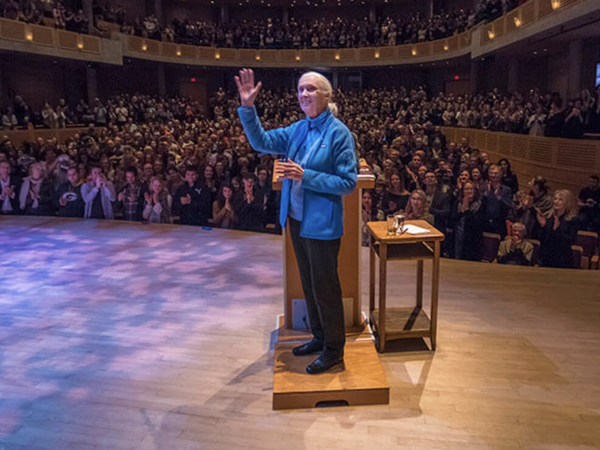
Goodall spent the remainder of her life traveling the globe as a UN Messenger of Peace, adapting her love for animals into a genuine love for other people. Her legacy continues to this day through her organizations and novels as the world tells the story of the woman who changed primatology and ethics for decades to come.
She not only redefined the scientific world, but she redefined what it means to be human too, seemingly shortening the millions of years of evolution between humans and apes.
Most importantly, Goodall shows us that the best way to make change is to be the change. Experiment creatively, fail with grace, be curious, and don’t be embarrassed to “nerd out.”