








AI has been a pertinent topic of today’s discussions. But what role does it play in art? I plan to major in Animation/Vfx at Drexel next year and I was very hesitant selecting this major because of all the discourse on employment issues. There were so many claims and opinions that all seemed to point to a declining industry since most people believe AI will completely take over. But this is not true. This article explores the influence of AI on creative, original work (bad and good), the importance of avoiding Gen AI, and how our use (the general public’s use) ties into the development of artistic practices in professional workplaces in the context of the art/filmmaking industry. I think it is important that everybody in our generation has a thorough understanding regarding the topic of AI because of its profound effect. We are quite unique in that we have the power to write a 10 page essay in 20 seconds. Therefore, it is up to us to practice and encourage ethics correlated with modern developments for upcoming generations and the welfare of our own.
My brother is in 6th grade and during one of his playdates, I interviewed a few of his friends about their understanding of AI. My question to them was: “When you are on digital media platforms, can you tell when something is AI generated, and if so, do you care whether it is righteous?”. To this question, most of them had responded that they don’t really care if something AI pops up on their feeds. They said while it is quite easy to tell now, it is getting a little harder to differentiate and therefore, they don’t pay much attention to it anymore. This is quite concerning, not to mention there are children even younger than them.
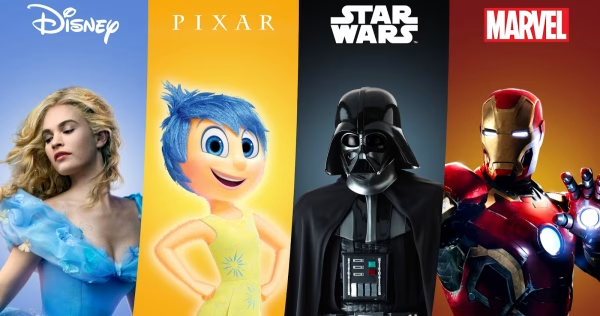
But to understand prevention, we must understand the source of the problem. Let’s look at the negative effects of AI, specifically on art. There is this feature on Instagram and other media platforms, known as Meta Data Scrapping, where if an artist or creator were to post their work on a public account for others to see, that work is automatically subject to be used in generative AI. If you drew a penguin and posted it on Instagram, and someone were to go onto ChatGPT and ask for a drawing of a penguin, the output is not only extracted from your work, but the work of many other penguin artists out there. While some countries, specifically in Europe, have the option to turn off this feature, we here in the United States do not have this luxury. Furthermore… layoffs. Disney, specifically Marvel, has laid off over a 1000 staff members on their visual development team. While Disney has not outwardly stated AI was the reason, many former workers claim this true. This scenario was also seen across studios such as DreamWorks, Pixar and Netflix. Also, notice here that all the names listed are of large, highly commercialized studios.
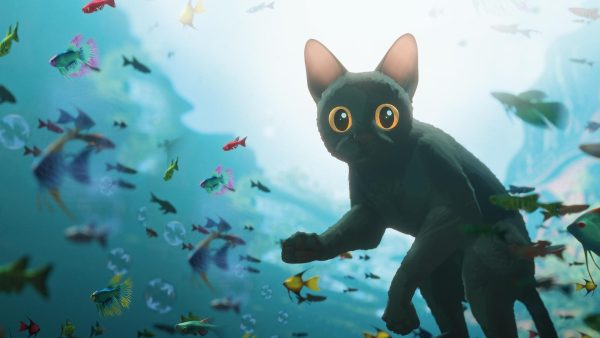
Now, what is being done in the film industry to fix this? As I previously mentioned, much of the studios with layoff problems and unethical practices are large, high budget studios. As a result of this pattern in disrespect for artists, innumerable Indie studios (independent studios) have opened. The efficiency of these institutions was proven especially when the film Flow won an Oscar for “Best Animated Film Feature” at the Academy Awards. Flow was made on “Blender” which is a free, public software. With a simple story, plan, and software, the team of artists behind this film were able to create wondrous works with a shockingly small budget.
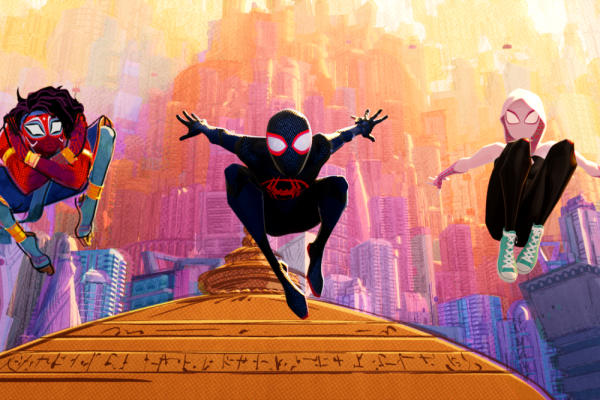
Other movies like “Spiderman: Into/Across the Spider-verse” found a balanced way to incorporate AI related technologies. All the artists on this film prioritized and prohibited the use of Generative AI, but used ethical outlets like machine learning to improve their filmmaking process and spend more time on conceptual, rather than technical aspects. Even with machine learning, the spiderverse films had double the animators than most animation films, and took a lot more time to completely render, showing that using AI related-technologies isn’t necessarily completely damaging to the industry.
Furthermore, directors like James Cameron are refusing to work with any companies associated with generative AI use. When someone with as much influence as him makes such a bold statement, lots of questions begin being raised. In addition to film makers and creators, AI companies themselves are making efforts to make their software ethical. Co-founder of “Prima Labs” (an AI infrastructure company) ,Prasana Balaprakash, was asked about what specific efforts are underway for ethical use and to this, he responded:
“Significant efforts are underway regarding AI ethics, including the development of digital watermarking to identify AI-generated content and new copyright frameworks to protect intellectual property. Organizations and regulatory bodies are increasingly focusing on “Responsible AI” to ensure transparency and fairness in how models are trained and deployed.”
But this is beyond what companies can do, it is what we can do that makes a difference:
- When you use AI, make sure to mention it or credit it. I know this can be hard to do since you don’t want to seem like your personal efforts were scarce. But keep in mind, enough transparency also reflects what exactly you used AI for.
- Next, use AI as an incentive to ask questions. It may not know everything, but it certainly knows a lot of things. Rather than using it as simply a shortcut to find answers faster, ask the right questions. Use this as a resource to promote critical thinking.
- Next, do you not input personal and confidential information into AI. The information you put in, as I mentioned before with Meta Data Scraping, is added to the system to train the model. Not only will your personal information affect the training itself, it is proven unsafe for you since you have no control or way of retrieving that information.
- Before you decide to AI, ask yourself, “Is it fair?”. Is it fair to undermine effort, passion, determination, and interest of others?
- Finally, (the most recommended strategy), do not use Generative AI all together. Gen AI, in particular, has an extremely detrimental impact on the environment through the overconsumption of electricity and water used to cool the AI servers (causing droughts). By not using AI all together, you would have innumerable positive implications on the environment.
We truly are a unique group of people and we can only take the knowledge we have accumulated from our experiences to support an entire generation of youth or an entire community of artists. I know for certain art is not going to die, that is a ridiculous notion. But it may lose “soul” and value if what is meant to be used as a tool, a resource is misused simply to cut corners.