















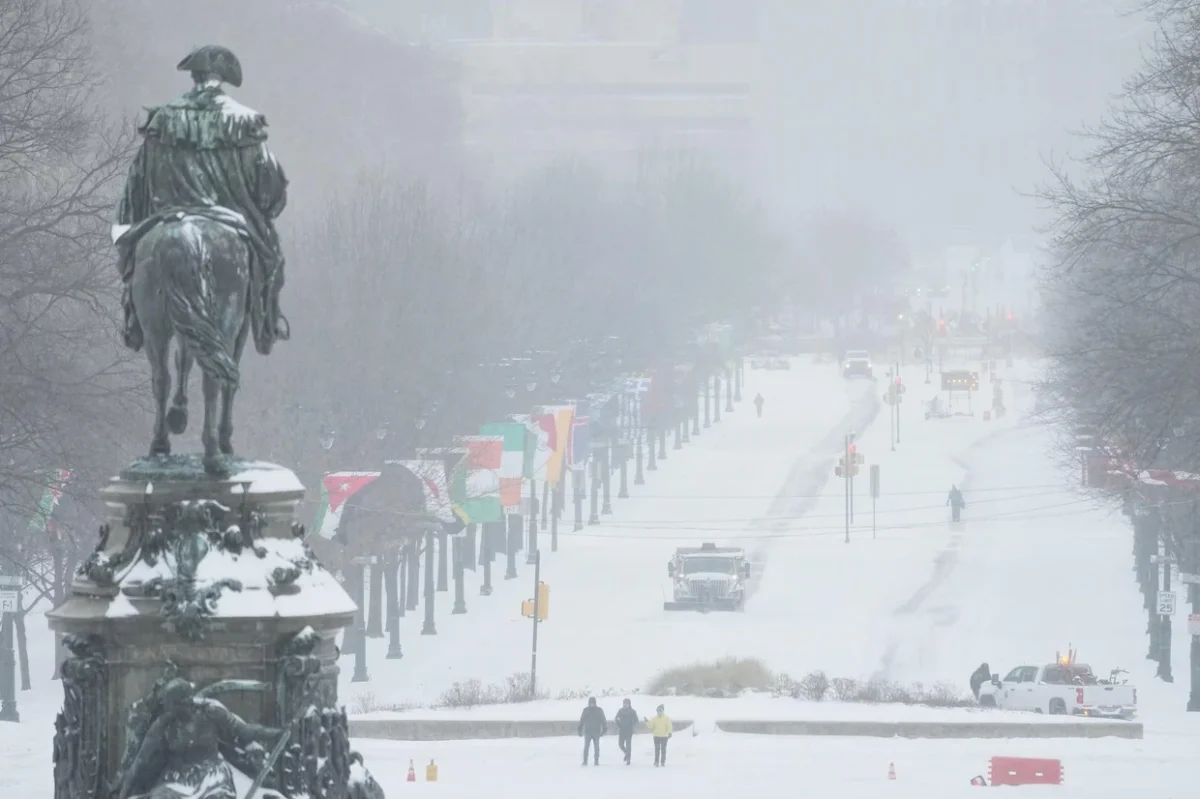
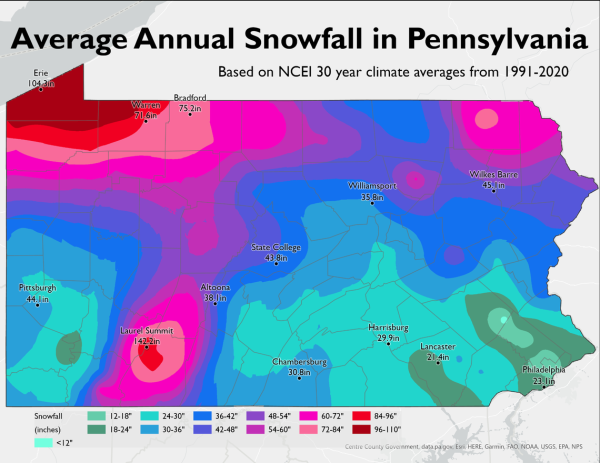
When last week’s winter storm swept through the United States, it delivered exactly what Americans expect from severe weather: snow, ice, and a solid reminder that you really shouldn’t leave shoveling until the last minute. Forecasts warned of heavy snow across much of the country, phones buzzed with alerts, and Apple Weather briefly suggested that Jack Frost himself had personally RSVP’d with 21 feet of snow. In reality, the storm was about 7.6 inches in King of Prussia and still disrupted travel, strained infrastructure, and coated cities in ice.
Behind those forecasts sits a complex national system of atmospheric research, much of it historically supported by the National Center for Atmospheric Research (NCAR) in Boulder, Colorado. So no, the weather app is not based on a magical crystal ball but instead on a sequence of satellites and weather balloons. For decades, NCAR has been known as the “Global Mothership” because it played a central role in improving weather and climate models used by federal agencies and local meteorologists. NCAR contributes to storm tracking of hurricanes, tornados, snowstorms and more. In addition to tracking, they are in charge of long-range modeling that helps communities prepare for extreme weather events, such as last week’s storm.
But in a twist worthy of a good old sci-fi movie, NCAR’s fate got tangled up in federal politics. In December 2025, the Trump Administration announced plans to dismantle NCAR. The White House Office of Management and Budget called NCAR “one of the largest sources of climate alarmism in the country,” and The National Science Foundation began soliciting ideas to break up the center’s functions and move them elsewhere. The idea, according to the administration, is that vital activities like weather research can still happen, just not under the same roof.
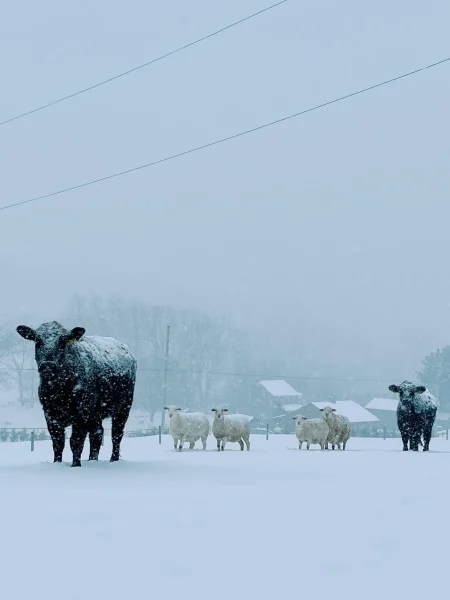
(Wingswept Acres/Facebook)
Scientific communities are not exactly throwing a parade for this plan. Hundreds of meteorologists, climatologists, and lawmakers, including Colorado’s senators, raised concerns about how restructuring could affect coordination, data integration, and the speed at which research translates into operational forecasts.
Here’s where the consequences become real–last week’s winter storm reminded forecasters and emergency managers why the coordination of the NCAR mattered. While forecasting models did successfully identify the snow days in advance, projected accumulation shifted repeatedly in the days leading up to impact. Some variability by less than 3 inches is normal–winter storms are notoriously difficult to model–but researchers note that forecasting accuracy depends heavily on continuous model refinement, something centralized research institutions are designed to support that was not available during that time. This lack of coordination led to snow estimates of almost 15 inches more than reality in some cases.
Emergency managers rely on forecast precision to decide when to pre-treat roads, stage utility crews, and issue public warnings. Even modest uncertainty can affect those decisions. While last week’s storm did not reach worst-case predictions in many areas, it still caused power outages, flight cancellations, and hazardous driving conditions.
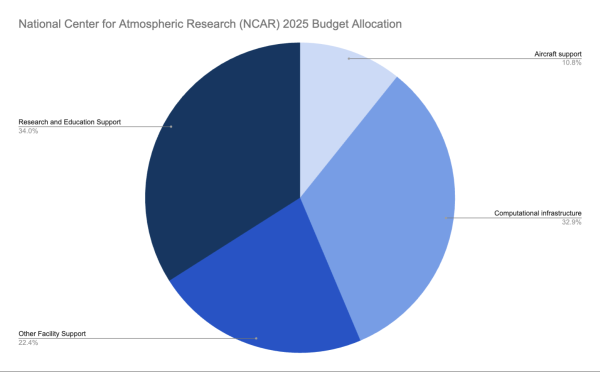
Some scientists and advocates argue that dismantling the NCAR isn’t eradication, it’s preparation. The Trump administration says it hopes that this could be an opportunity to re-distribute research resources more efficiently and refocus NCAR’s $123 million budget into other key programs. Officials at the White House also note that weather outcomes depend on countless variables, and forecasting remains a probabilistic science.
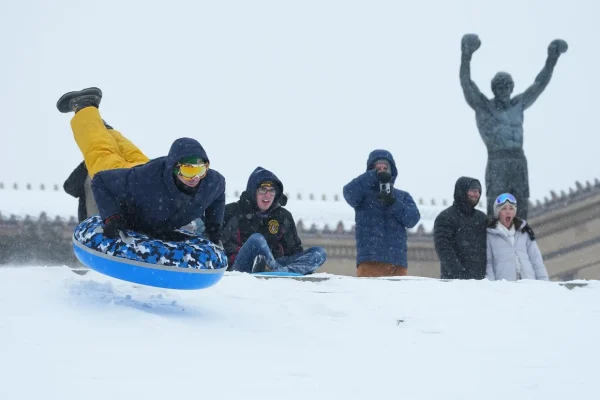
As this storm finally moves to the past, leaving behind slushy sidewalks and disappointed sledders, the broader lesson was less cinematic and more practical. Snow storms may not follow scripts, no matter what the weather app promises, but the science behind predicting them benefits from stability, coordination, and sustained research investment–especially if Jack Frost decided to pay us all a visit.