











I should preface this by saying that I haven’t read the source material nor I am familiar with its content, therefore I can’t really speak to Wuthering Heights as an adaptation. Since watching the film, I’ve been exposed to very different opinions from both sides of the spectrum on the internet, with some people absolutely adoring the film and others being turned off by the lack of alignment with Emily Brontë’s literary classic I am aware of some of the controversies that this project has sparked and there is a chance my viewing experience would have been much different had I previously read the book, but this review is purely my personal thoughts on the film itself.
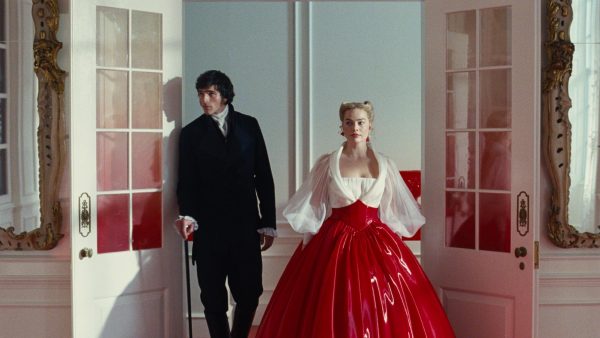
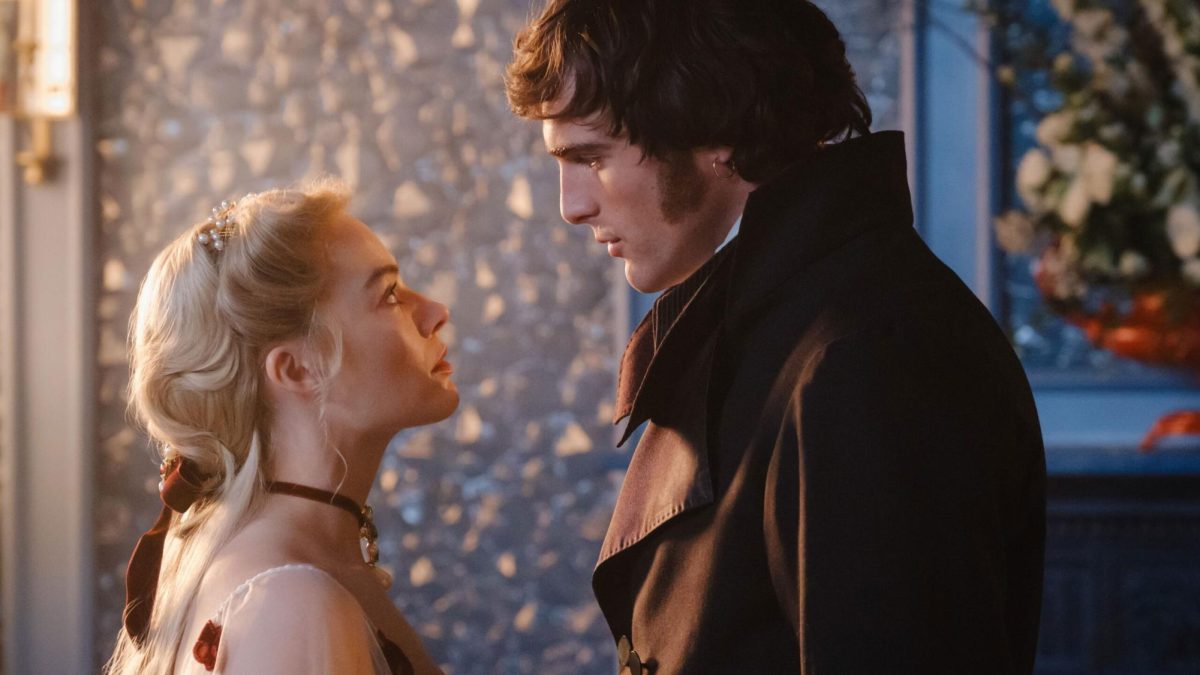
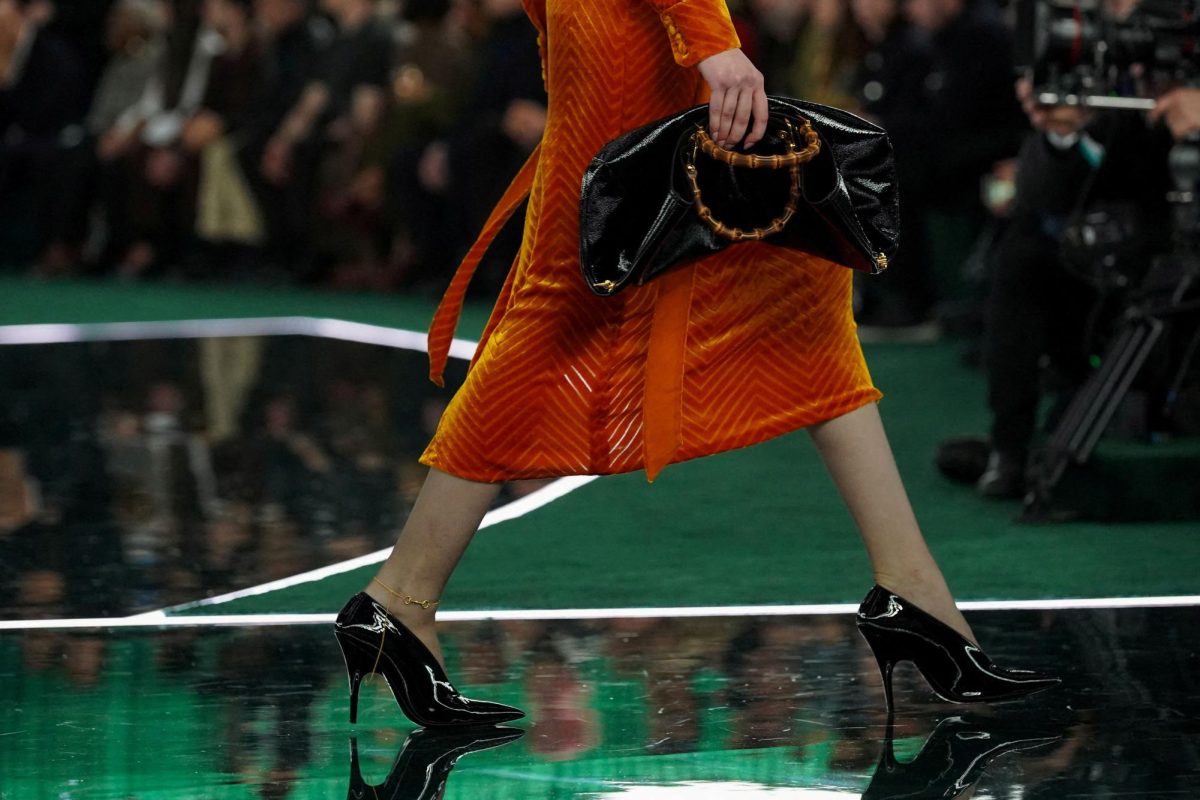
I wanna start off with what I loved about this film because from a technical standpoint, all I have to say is wow! I ended up watching this in IMAX and let me just say that this has some of the most gorgeous, spell-binding, and dreamy cinematography I’ve ever had the pleasure of looking at. Between the beautiful color grading, with its rich saturation and warm reds, and the way in which cinematographer Linus Sandgren utilizes lighting and shadows to amplify the mood of every scene, the film really has a way of sweeping you into a hypnotic, almost trance-like state. Also, it seems like both Sandgren and Fennell were inspired by the likes of Robert Eggers, as the structure of the shot compositions (the symmetrical placements and architectural angles) feels very reminiscent of Eggers and Blaschke’s work in Nosferatu. Going hand in hand with the mesmerizing visuals are the production and costume design, as they effectively amplify this gothic and bleak yet sometimes romantic aesthetic that the film goes for. The Yorkshire moorlands setting, in conjunction with the architecture work, allows for this wonderful contrast between the drearily bleak imagery and the whimsical elegance that the Linton mansion offers. When it comes to the wardrobe, the outfits and costumes may not accurately reflect that of the late Georgian period, but I personally didn’t mind the bold, modern choices, as they’re stylistically and artistically much more interesting. The work on Catherine’s character though, with all of her makeup, hairstyles, and dresses, was particularly stunning. And lastly, we have the music. In charge of handling the musical arrangements for Wuthering Heights was pop star Charli xcx who, I thought, did a fantastic job. She mixes synth-heavy hyper pop sounds with some orchestral strings to create this really cinematic yet contemporary soundtrack that blends perfectly with the visual aesthetics. When examining all of these different aspects, I honestly wouldn’t be surprised at all if this film managed to get nominated at the 2027 Oscars in some of the technical categories such as production and costume design because the visual atmosphere and the world of Wuthering Heights is truly that impressive.
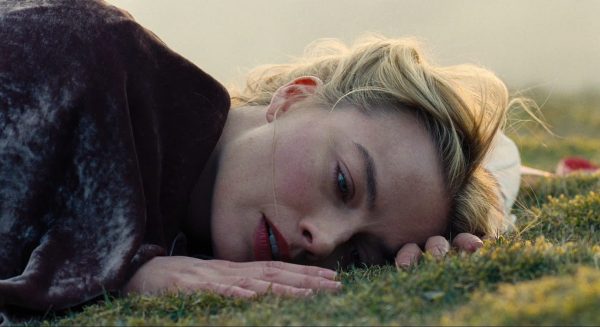
But when it comes to the actual narrative itself, this is where things get kind of complicated. I think the biggest issue with Wuthering Heights is that there seems to be a huge disconnect between how the film comes off and the intentions behind the narrative. Without having read the book and only watching this so-called “adaptation”, Wuthering Heights is about a toxic, violent, and destructive relationship between two characters who don’t know how to exist without the other, but also can’t be together without ruining the lives of each other and everyone around them. It appears as though both Catherine and Heathcliff, the two main characters, internalize the rage they endured from her father, as it ultimately bleeds into how they “love” one another as well as the way in which they treat others who attempt to interfere with their tumultuous love affair. The fact that both were on the receiving end of either Mr. Earnshaw’s emotional or physical abuse seems to have trauma-bonded them together, but it also seems to have inspired that same wickedness inside both of them. Like most unhealthy relationships, instead of harboring honest communication and emotional vulnerability, the intense dynamic between the two is fueled by jealousy, passive taunting, and psychological warfare, seemingly feeding into this rather primal, lustrous desire that both share. And because of how powerful this attraction is, neither Catherine nor Heathcliff can resist the touch of the other. But in the process, as their secret meetings blossom into a messy, torrid love affair, they threaten the safety and livelihood of those closest to them, almost as if their bond was an infectious, contagious disease. And without giving too much away, it’s because of their all-consuming affair that tragedy eventually strikes, leaving everyone ruined and devastated in the end. Once again, Emerald Fennell’s approach to the film seems inspired by the likes of Robert Eggers, who in his most recent work, Nosferatu, was not at all afraid to display the uglier, more obsessive side to desire and sexuality.
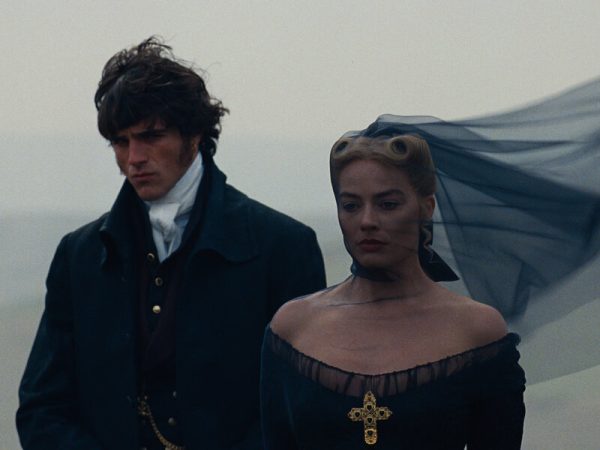
And while this all sounds great in theory, as it would construct a very complex and nuanced depiction of “love” that we don’t often see, I’m not 100% sure that this was the angle Emerald Fennell was going for. Between watching various interviews of her speaking about her adaptation and analyzing the way in which the subject matter is portrayed in the film, I’ve come to the conclusion that Emerald Fennell thinks she is telling a tragic, but beautiful love story about two morally-complicated, star-crossed lovers who are doomed because of how much they care for one another, which consequently waters-down a rather interesting and nuanced subject matter regarding toxic relationships. The film focuses heavily on the yearning and chemical attraction between the two characters, rather than the chaos, madness, and destruction that ensues. This matches up with something she said in an interview, that statement being “I wanted to make something that made me feel like I felt when I first read it, which means that it’s an emotional response to something. It’s like, primal, sexual.” And while there were definitely instances where waves of that intense desire and sexual tension she wished to capture hit me, there were more moments shared between Catherine and Heathcliff where I felt uncomfortable more than anything else, as I knew there was very little of anything loving or romantic about their, rather frightening, dynamic. Speaking of said dynamic, Fennell fails to properly develop this romance between Catherine and Heathcliff, as there weren’t nearly enough moments between them to help me become emotionally involved in their complicated connection.
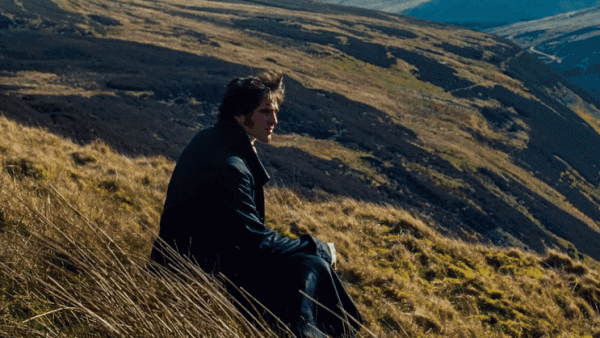
Arguably the biggest flaw I found in the film is the lack of refined rationale in the characters, as the reasoning behind each’s individual actions and cruel tendencies are not fully developed outside of their relationship. I almost feel like Fennell includes too many scenes of them pining over each other, so many that we don’t really understand Catherine and Heathcliff outside of their romantic attraction for one another. Heathcliff has this brooding, dark energy to him, but it feels as though the film is skimping us out on crucial events that would have shaped him into such a monstrous being bent on emotional torment. Jacob Elordi is actually quite good at embodying Heathcliff’s intense and imposing physical presence, channeling both the charm that draws people to him and brutishness that scares them, but the character of Heathcliff himself lacks the proper characterization necessary to be a compelling person. Moving on to the central performance, despite feeling less passionate about her portrayal than Elordi’s, I think Margot Robbie does the best with the script given her and is quite good at pulling off Catherine’s drastic, emotive mood swings. But unfortunately, Catherine’s character feels even less developed than Heathcliff. While emotional abuse isn’t something to be taken lightly, it is Heathcliff who bears the physical beatings and lacerations from her father, sacrificially taking the blame and shielding her of the trauma that enduring such an assault would spark. We, as an audience, never really get the chance to explore the psyche and psychological context of Catherine’s character outside of these incidents when she was child, which left me sort of befuddled as to why her character would be so casually and confidently cruel to others. My issue with both characters ultimately came down to the fact that I find them and their motivations to be abstruse, not because most of their actions are morally wrong. I’m actually quite fond of films that utilize unreliable or “unlikeable” characters as their protagonists as long as they’re complex or nuanced, but this film isn’t able to construct its protagonists in this fashion. As a result, Wuthering Heights isn’t nearly complex or detailed enough in its character work to be a mature dissection of class, toxic love, and cycles of abuse, as the subject matter is there but not really explored beyond its surface-level properties.
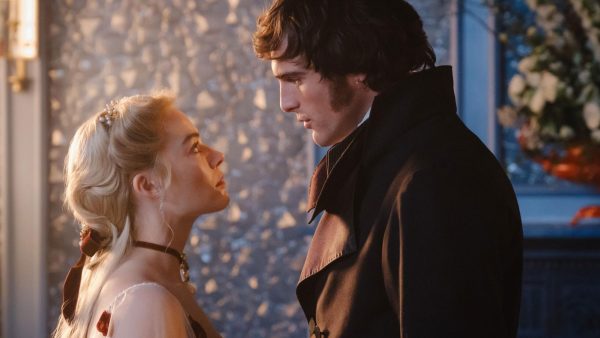
This is ultimately why Wuthering Heights is really hard to rate for me. On one hand, I was certainly captivated the entire runtime by the film’s visual and sonic elements, and I definitely found my own thematic commentaries in the film on destructive, all-consuming romances. But on another hand, the film seems to somewhat romanticize and reframe an abusive relationship as this tragic yet moving love story, resulting in a personal conflict of interest. And I’m not necessarily one to be a puritan when it comes to adapting literature to the big screen, but from what I’ve since learned about the novel, I think Wuthering Heights could have benefited from staying a little bit truer to the source material. Even without reading the book, I get the feeling just from watching the film that there’s a much better, complex, and compelling story underneath what is actually presented to the audience. While there were ultimately some parts of the story that I admire and others that left me longing for more, I’d be lying if I said I didn’t have a nice time, since witnessing Wuthering Heights in IMAX was a wonderfully immersive and mesmerizing experience. I feel like most people will either love or hate this film (both for very obvious reasons), but I’d say I’m somewhere in the middle.
But most importantly, I need to shout out my boy Owen Cooper, known for his breakout role in Adolescence, who plays the younger version of Heathcliff in this film. Dude is seriously talented and absolutely kills it in this role